
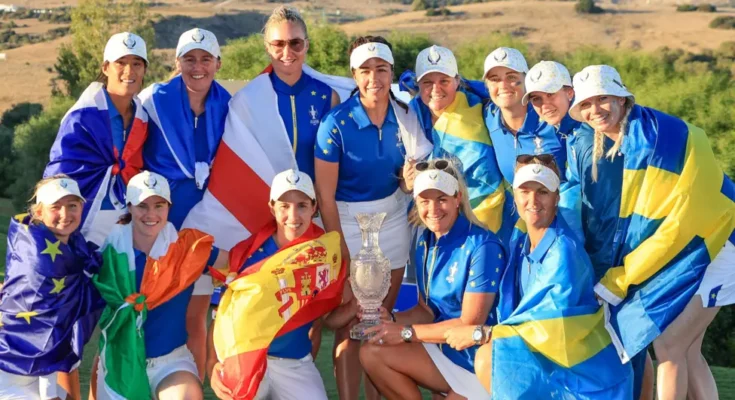
Following Europe’s dramatic Ryder Cup success, England Golf is mounting a major push to bring another prestigious team competition to British soil. This time, however, the spotlight is on the women’s game.
England has never hosted the Solheim Cup, the biennial showdown between the best female golfers from Europe and the United States. That could change in 2030—if the government steps in to support the bid.
England Golf, the national governing body for the sport, has submitted a proposal to host the Solheim Cup at The Grove in Hertfordshire. The venue, located just outside London, has the facilities, hotel capacity, and global accessibility needed to stage an event of such scale. But the challenge isn’t finding the right stage—it’s finding the money.
The Financial Hurdle
The bid requires around £30 million in funding, of which only £10 million has been secured so far. England Golf is now urging the government to underwrite the remaining £20 million to ensure the event becomes a reality. According to chief executive Jeremy Tomlinson, without swift financial backing, the bid could collapse.
“We’re at a crunch point,” Tomlinson told BBC Sport. “The International Management Group (IMG), who hold the rights for the 2030 event, want a resolution by the end of the month. We need clarity soon, otherwise England will miss its chance.”
While the figure may sound significant, Tomlinson argues that the return on investment would be substantial. Compared with the Ryder Cup—where staging costs soar past £400 million—the Solheim Cup represents a fraction of the outlay.
Yet, it still promises to deliver national exposure, inspire participation in golf, and generate both local and nationwide economic benefits.
Why England?
England has produced a long line of women’s golf stars, from Charley Hull and Georgia Hall to rising talent Lottie Woad. Despite this, the Solheim Cup has never been played in the country. Scotland has hosted twice and Wales once, but England—the largest golf-playing nation in Europe—has never staged the competition.
Tomlinson sees this as a glaring omission. “We’ve provided so many inspirational players over the years. It feels right that the Solheim Cup finally comes to England. It’s a chance to showcase our talent and give the women’s game the stage it deserves.”
The choice of venue also strengthens the case. The Grove, which previously hosted a World Golf Championships event, is located just outside Watford, within easy reach of London and major transport hubs. Its facilities and infrastructure make it a logical choice for hosting global tournaments.
Economic and Social Benefits
The bid document submitted to government highlights the potential returns of staging the event. England Golf argues that hosting the Solheim Cup would inject millions into the economy through tourism, hospitality, and job creation. Beyond the immediate financial boost, the event could leave a lasting legacy by increasing participation in golf, particularly among women and girls.
“We’ve all seen the impact the Ryder Cup can have,” Tomlinson explained. “It inspires people, it brings communities together, and it puts a nation on the sporting map. We believe the Solheim Cup can do the same for women’s golf.”
There’s also a broader social argument. Women’s sport has been gaining momentum in recent years, with increased visibility and growing audiences. Hosting the Solheim Cup in England would align with wider goals of promoting equality in sport and ensuring female athletes receive the same opportunities as men.
Government Support in Question
So far, initial talks with government have been described as “positive,” but the final decision has yet to be made. The Department of Media, Culture and Sport (DCMS) has acknowledged the UK’s strong track record of hosting international events, pointing to a pipeline that includes the Women’s T20 World Cup in 2026 and a planned bid for the FIFA Women’s World Cup in 2035.
In a statement, a DCMS spokesperson said: “The UK has a world-leading reputation for hosting major sporting events and we want that to continue. Staging events on home soil captures imaginations, encourages participation and boosts local economies.
Support for future bids will be based on a range of criteria including how far they help create social and economic benefits for the UK.”
For England Golf, this response offers hope—but also urgency. With IMG demanding a resolution soon, the government must decide quickly whether it is prepared to underwrite the bid.
Balancing Costs and Value
The debate ultimately comes down to cost versus value. For the government, committing £20 million is not insignificant, especially in the face of competing financial priorities. But Tomlinson insists the benefits outweigh the risks.
“When you compare it to other major sporting investments, the Solheim Cup offers incredible value,” he said. “We’re not asking for hundreds of millions. We’re asking for an amount that will secure an event capable of inspiring the next generation and showcasing England on the global stage.”
There’s also precedent. The UK government has previously backed international events, including women’s rugby and world athletics competitions. Supporters of the bid argue that the Solheim Cup deserves similar recognition, especially given the growing importance of women’s sport in the national conversation.
A Legacy Beyond the Tournament
Beyond the economics, the real power of hosting the Solheim Cup lies in its legacy. Women’s golf has traditionally struggled for visibility compared to the men’s game. Bringing one of its biggest tournaments to England would shine a spotlight on female golfers, inspire more young girls to pick up clubs, and create lasting change in participation levels.
The Grove, with its links to London and strong community ties, could become a symbol of this legacy. By staging the Solheim Cup there, England Golf hopes to create an event that not only entertains fans for a week but also leaves a mark for years to come.
Conclusion
England Golf’s bid to host the 2030 Solheim Cup represents more than just a sporting event—it’s a chance to invest in the future of women’s golf and demonstrate the country’s commitment to gender equality in sport. The financial backing required is significant, but the potential rewards—in economic impact, social progress, and national pride—are even greater.
With time running out, the government now faces a defining decision: support England Golf in bringing the Solheim Cup home for the first time, or risk missing an opportunity to showcase the best of women’s sport on English soil.
If approved, the 2030 Solheim Cup at The Grove could be remembered not just as a tournament, but as a turning point for women’s golf in England—a moment where ambition met opportunity, and the game changed forever.